• Café Life is the Colony's main hangout, watering hole and meeting point.

    This is a place where you'll meet and make writing friends, and indulge in stratospherically-elevated wit or barometrically low humour.

    Some Colonists pop in religiously every day before or after work. Others we see here less regularly, but all are equally welcome. Two important grounds rules…

    • Don't give offence
    • Don't take offence

    We now allow political discussion, but strongly suggest it takes place in the Steam Room, which is a private sub-forum within Café Life. It’s only accessible to Full Members.

    You can dismiss this notice by clicking the "x" box

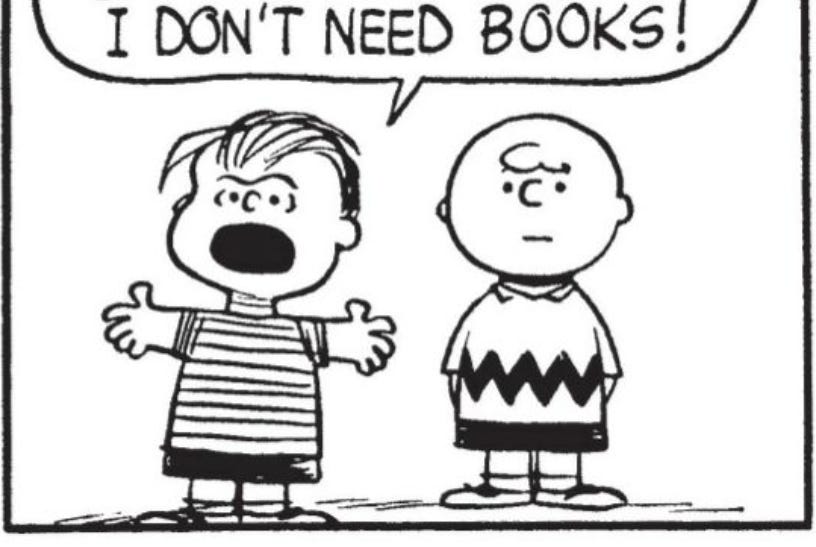
Craft Chat TV Brain Prose and Writers Who Don’t Read

Interesting, indeed! Reminds me of Ursula Le Guin saying that screenplays are written in present imperative, which just adds weight to the dangers of writing novels using the TV brain -- you end up asking the reader (now standing in for both audience and production crew) to enact the world, instead of author and reader enacting it together (telepathically, as Stephen King would have it).
 
I watch far less TV now than I used to, and I read far more than I used to.
My writing is improving.
It's not the reason, but it might be a small, contributory factor.

The converse is also true: the more I write, the less I want to watch TV and the more I want to read.

And the more I read, the more critical I am of TV drama. Or maybe I'm just getting old.

It's funny how there are good TV and film adaptations of novels, but I've never read a good novelisation of a TV show or film.

Anyway, just some musings prompted by your post. Are you a regular Substacker @Aethalope ? I'm on there, but I don't post much. I can't get into the swing of it, and it feels like tiny voices can't be heard. But there's some really interesting stuff to read if you can find it amongst the clamouring-to-be-read self-promotion hot air.
 
“TV brain” prose tends to lack interiority and perspective. This is a big problem since those are arguably the greatest strengths of prose over film.

Very aguably. I don't think movies would be very popular if they lacked 'interiority and perspective.'

His argument seems to be that because the camera shows us everything, 'TV-brain' has led this writer to describe everything. But just because a camera technically records everything in its field of view doesn't mean that a film can't emphasise certain scene elements and put them in perspective to let us know what is going on internally in the characters. If they couldn't, they would be extremely boring.

The example in the post is bad writing, and would also be a bad movie scene. Is it bad because the writer has watched too much TV? Maybe ... who knows?
 
Very aguably. I don't think movies would be very popular if they lacked 'interiority and perspective.'

His argument seems to be that because the camera shows us everything, 'TV-brain' has led this writer to describe everything. But just because a camera technically records everything in its field of view doesn't mean that a film can't emphasise certain scene elements and put them in perspective to let us know what is going on internally in the characters. If they couldn't, they would be extremely boring.

The example in the post is bad writing, and would also be a bad movie scene. Is it bad because the writer has watched too much TV? Maybe ... who knows?

Yeah, I agree. If this was formatted as a screenplay, it would also be bad writing. Screenwriting seems to get a bit of a bad rap in terms of showing what characters are thinking and feeling. Done well, it's awesome and can be very personal and emotional. Same as a book, I think. There's different formats, and different ways to go about it, but good writing is good writing in any medium.

I do agree that reading is really important to writing. As a screenwriter, you read a lot of great screenplays to learn. Same for novelists, or short story writers, etc. No? It also helps to be well read in your own genre. If all you read are crime novels, and you write a romance, it might prove challenging.

I'm wandering and think I'm missing the point of the article. Sorry! eek.
 
Yeah, I agree. If this was formatted as a screenplay, it would also be bad writing. Screenwriting seems to get a bit of a bad rap in terms of showing what characters are thinking and feeling. Done well, it's awesome and can be very personal and emotional. Same as a book, I think. There's different formats, and different ways to go about it, but good writing is good writing in any medium.
Agreed, very much.

Could it be that a script or screenplay isn't supposed to be the finished product? They can be extremely well written, but ultimately they exist to be interpreted by actors, directors, etc. Whereas a novel or short story is the finished product. And so, perhaps what the article is driving at is that watching film or TV and then trying to reverse engineer good writing from it can be a tricky task. You see an actor emote powerfully, but the screenwriter (in a brilliantly written screenplay) wrote only frustrated in parentheses above a line of dialogue. And then the I-don't-read writer comes along and starts writing eyebrow raises and shoulder twitches and nostril flares.

Might that be the problem?
 
@Rich. I think that is indeed the problem. Film uses fine actors to convey emotion and character depth. Can you imagine trying to write Captain Jack Sparrow?

Maybe also what's happening on a screen is like when someone sits in a park and watches drama unfold around them. They don't consciously note every beat or element of body language because it's just happening.

A book might be more like if that person later tells someone what happened at the park, perhaps revealing their innermost thoughts about these events. They wouldn’t show the physical beats unless relevant (he had huge nostrils... couldn't believe my eyes), and that isn't the primary mechanism for showing emotion. And a different observer might have a different spin or take, or different things they noticed or fixated on, which is where the voice might start emerging.

Hey, I feel a writing exercise coming on... :)
 
Ah… I just re-read that Substack article (better this time) and I get what he’s saying now. It’s not about screenplays vs novels at all, it’s about reading vs watching to learn how to write. Sorry, I got confused. Yeah, it seems kind of crazy that this is even a debate. In fact, I’d also say that anyone who only watches film/TV would also never know how to write a good screenplay… same end medium, but very different skills utilised to write one and produce one (acting, cinematography, directing, on and on.)

@Aethalope I was tempted for a second to do a writing exercise! Taking that scene that was written in prose and writing it into a screenplay scene, to make it emotive and interesting. More than the prose was anyway. (Although as covered by the Substack article, the whole scene is pretty lame.) Personally, I think the writer of that sample has more issues than not reading, although reading would be a good place to start.

@Rich. You’re right, the screenplay isn’t the final product, but as a written piece of work it should be. And it (generally) needs to be so good to go anywhere. And sometimes, the script is way better than the final product. Haha. Fun fact, writing things like “her nostrils flared” is a real no-no in screenwriting. You’re not supposed to “direct the actor” ever. So you have to find ways to show emotions other ways. Adding (Frustrated) under dialogue is one way, although arguably, not the best way, and you can’t do that too often. Anyway… this isn’t about screenwriting. Haha. Sorry for the tangent!! It’s about bad writing.

Just for fun, I've attached the screenplay for the first "Pirates of the Caribbean" which was written by the masters, Ted Elliott & Terry Rossio. Jack Sparrow is introduced on page 11. From this site. :)
 

Attachments

Last edited:
I've attached the screenplay for the first "Pirates of the Caribbean" which was written by the masters [...]
It's soooo good! The three-hander thing... it blows me away.

Ah… I just re-read that Substack article (better this time) and I get what he’s saying now. It’s not about screenplays vs novels at all, it’s about reading vs watching to learn how to write.
That's what I thought (that it was about reading vs watching to be a writer). But I was starting to doubt myself after your and @JohnBertel's comments, so I'm glad you reread the article and saved me the time. :) Screenplays can be great. Novels can be great. Any kind of writing can be great. But if one doesn't read, one might struggle to write anything good. Seems like a plausible argument (and as you say, it really does seem crazy that this is even a debate!).

Moving away from crap writing for a minute, I read thing a while back where the author Jeff Vandermeer was talking about his Southern Reach trilogy of sci-fi/horror novels. He was talking about being influenced by all the weirdness in Kubrick's adaptation of King's The Shining, and how he wanted to create the same disorienting effect in prose that Kubrick had created in vision and sound. I love the idea of a novel becoming a script (written by Kubrick and novelist Diane Johnson, I've just looked up), a movie, and then the inspiration for the tone of another novel. I bet everyone involved read loads.
 
Back
Top